Manali and Kullu sit about 40 km apart along the Beas River in Himachal Pradesh. Together they cover most of what a first mountain trip needs: wooden temples inside deodar forests, hot springs, snow at Solang and Sissu, apple villages and easy treks.
This guide covers both towns in one plan. Distances, fees and permit rules were checked against the Himachal Pradesh Tourism website and the official Rohtang permit portal in November 2026. Where sources disagree, we say so instead of picking one number.
Quick Facts
| Detail | What to know |
| Region | Kullu district, Himachal Pradesh |
| Manali to Kullu | About 40 km by NH3, roughly 1.5 hours |
| Nearest airport | Bhuntar (Kullu-Manali Airport): 10 km from Kullu, 50 km from Manali |
| Nearest broad-gauge railhead | Chandigarh, about 300 km from Manali |
| Delhi to Manali by road | About 530 to 570 km, usually 12 to 14 hours |
| Rohtang Pass permit (car or jeep) | ₹550 per vehicle (₹500 permit + ₹50 congestion charge), online only |
| Atal Tunnel | No Rohtang permit needed |
| Suggested stay | 5 to 7 days for Manali and the Kullu valley |
Best Time to Visit Manali and Kullu
March to June: Pleasant weather and green valleys. Himachal Tourism lists April to July as the main summer season. Rohtang Pass reopened on 17 May in 2026.
July and August: Monsoon. Hotels are cheaper, but landslides can block roads, and rafting usually pauses. Keep your plans flexible.
September to November: Clear skies and apple season. Himachal Tourism lists October to December as the autumn-to-early-winter season. Rohtang closes in late November once heavy snow arrives.
December to February: Snow around Solang and Sissu. Temperatures in Manali can drop below minus 5°C in December and January. The Manali Winter Carnival is held in the first week of January.
The Atal Tunnel stays open when Rohtang is shut, so Sissu and the Lahaul side remain reachable in winter.
Top Places to Visit in Manali
Hadimba Devi Temple
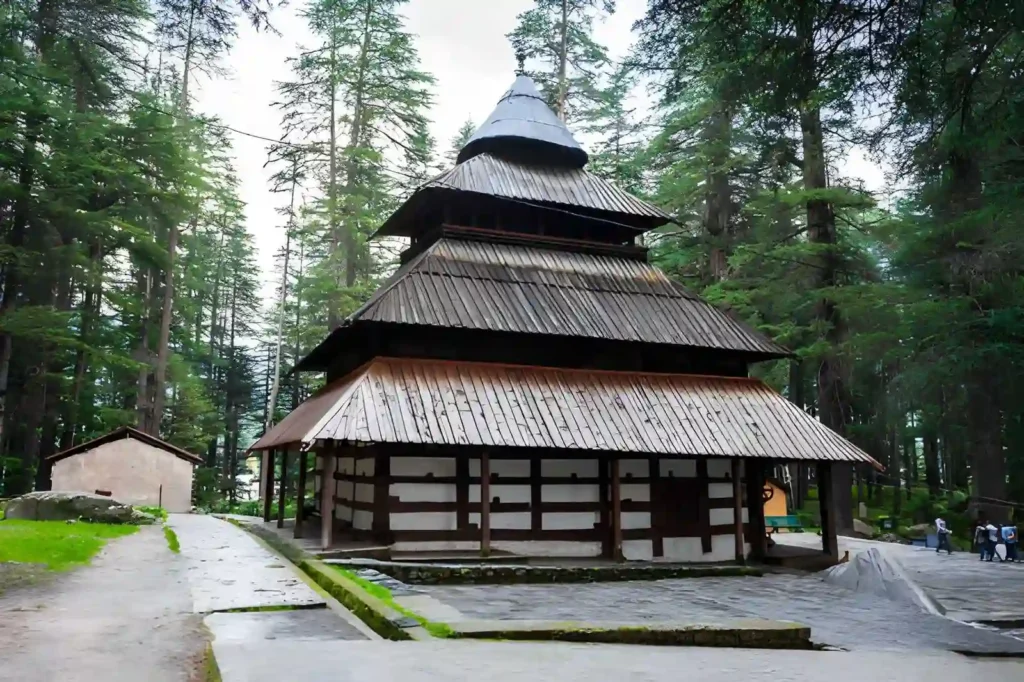
The temple was built in 1553 and stands about 24 metres tall inside a cedar forest. Himachal Tourism describes it as a four-tier pagoda in wood and stone. The sanctum is built around a cave and has no idol.
- Timings: 8 AM to 6 PM, every day
- Entry fee: Free
- Distance: About 2 km from Mall Road
Go before 9 AM. The forest is quiet and the tour buses have not arrived. Do not pay anyone at the gate for a “special entry”. The Dhungri fair is held here in spring.
Manu Temple and Old Manali
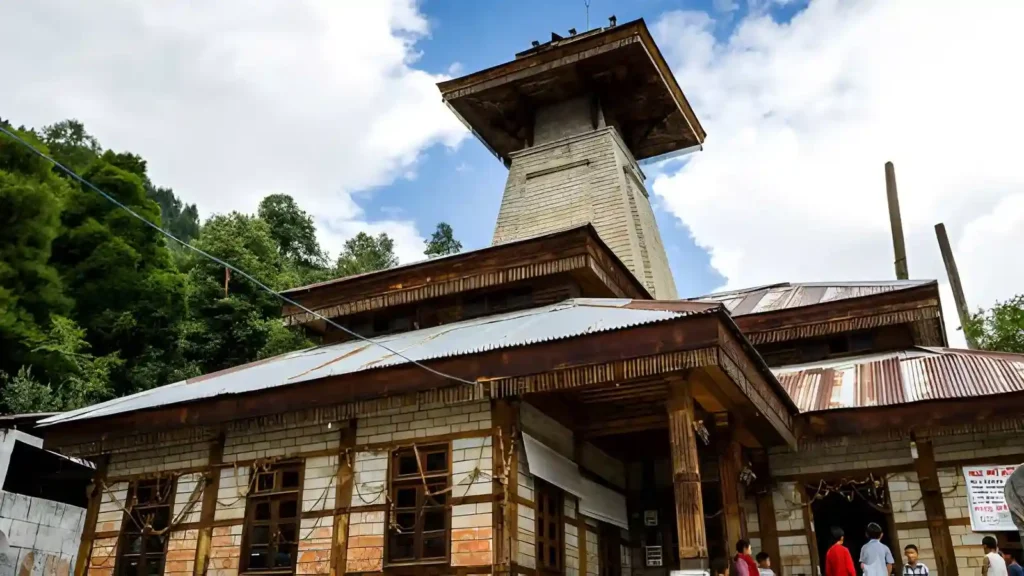
Old Manali is across the Beas River, slower and greener than the main market. Manu Temple sits at the upper end of it, about 3 km from Mall Road. It is dedicated to sage Manu, and Himachal Tourism notes that temples of Manu are rare in India. The town’s name is believed to come from “Manu Alaya”, the home of Manu.
Most sources list the temple as open from early morning to around 5 or 6 PM. Entry is free and the visit takes 20 to 30 minutes. Walk down from Hadimba Temple instead of taking a cab. The village lanes are the better half of the trip.
Mall Road and the Tibetan Market
Mall Road is where Manali comes alive after sunset. Expect woollens, Himachali handloom, wooden souvenirs and plenty of street food. Bargain politely. Parking is near the main market, a short walk from the Mall.
Manali Gompa
The Gadhan Thekchhokling Gompa was built by Tibetan refugees in the early 1960s and sits close to Mall Road. Entry is free. Timings differ across sources, with some listing 6 AM to 6 PM and a few listing longer hours or a Sunday closure, so confirm locally. Mornings and evenings are best, when prayers are on.
Van Vihar
A deodar-lined park near Mall Road with a small lake and paddle boats. Most listings show ₹5 entry and ₹30 for 15 minutes of boating, but one source lists ₹50 for adults. Fees get revised, so carry some cash. Timings are usually 8 AM to 7 PM in summer and 8 AM to 5 PM in winter.
Vashisht Temple and Hot Springs
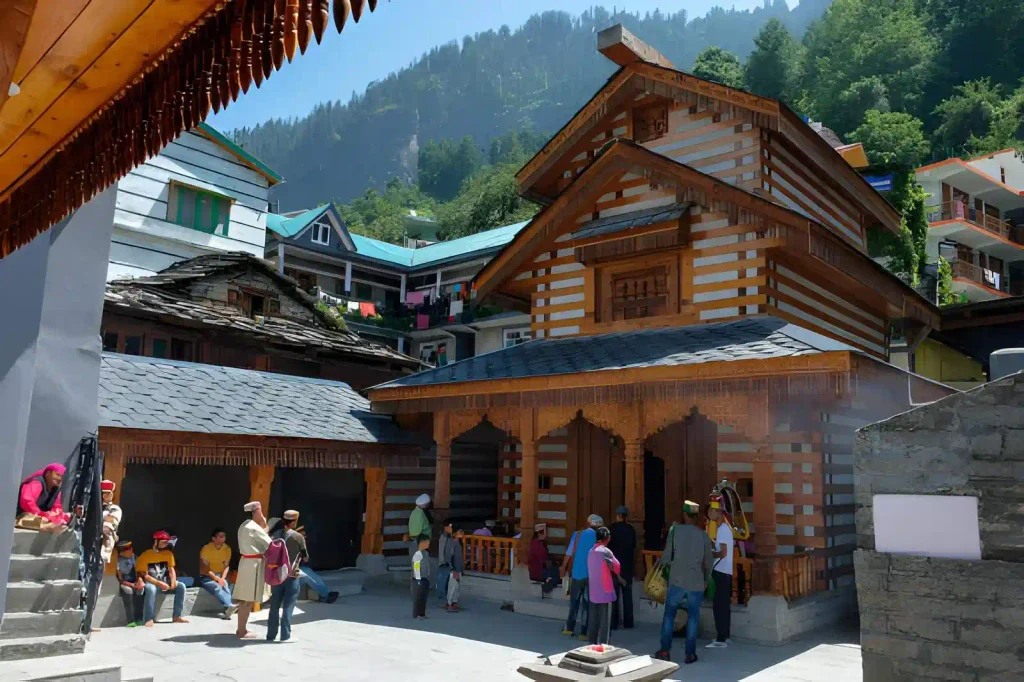
Vashisht is a village about 3 km from the main town, across the Beas. The temple is dedicated to sage Vashisht, and the hot sulphur springs next to it are the main draw.
- Temple: 7 AM to 9 PM
- Bathing: 7 AM to 1 PM and 2 PM to 9 PM (timings can change)
- Entry fee: Free
- Good to know: Bathing areas are separate for men and women. They are basic and public, not spa facilities. Photography is generally not allowed inside.
Carry a towel and a change of clothes. Evening is the best time, after a day of walking.
Jogini Waterfall
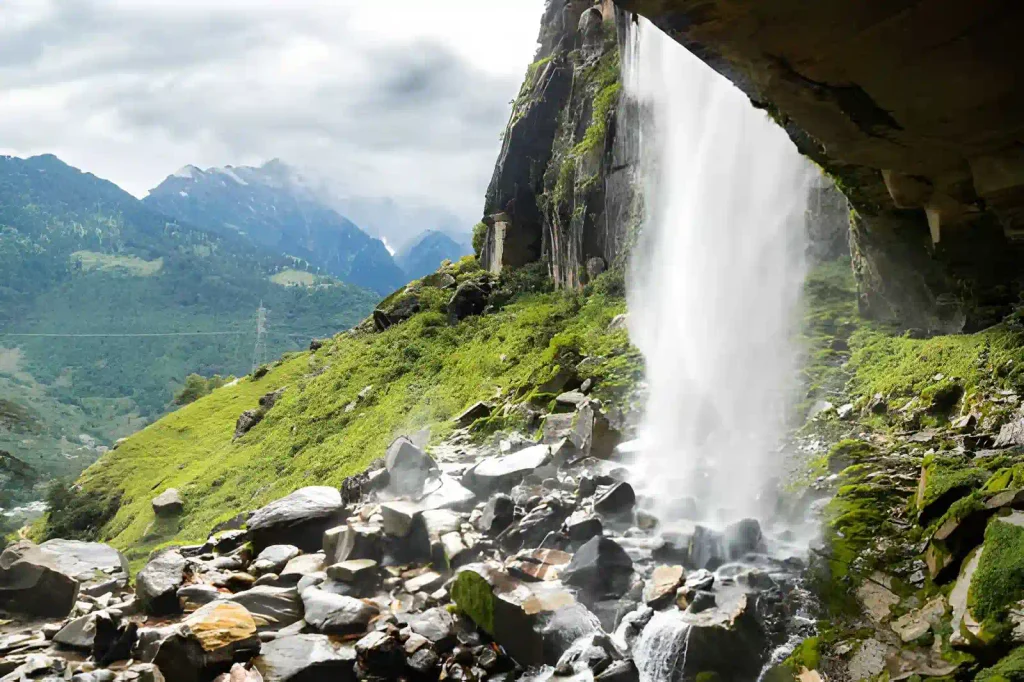
The trail starts in Vashisht and runs about 3 km through apple orchards and pine forest. Most people take 45 minutes to an hour one way. The fall drops roughly 150 feet. It is free.
- Wear shoes with real grip. The last stretch gets slippery.
- Start before noon so you are back before afternoon clouds.
- Avoid the trail right after heavy rain.
Combine it with the hot springs for a good half-day plan.
Nehru Kund
A natural spring about 5 km from Manali on the Rohtang road. Himachal Tourism says it is fed by the sacred waters of Bhrigu Lake, and that Jawaharlal Nehru used to drink from it on his visits. It is a free, five-minute stop on the way to Solang.
Manali Wildlife Sanctuary
The sanctuary starts about 2 km from the town. A forest path leads past Hadimba Temple towards Gallant Thatch. Stay on marked paths and check current entry rules with the forest office before you go.
Day Trips from Manali
Solang Valley
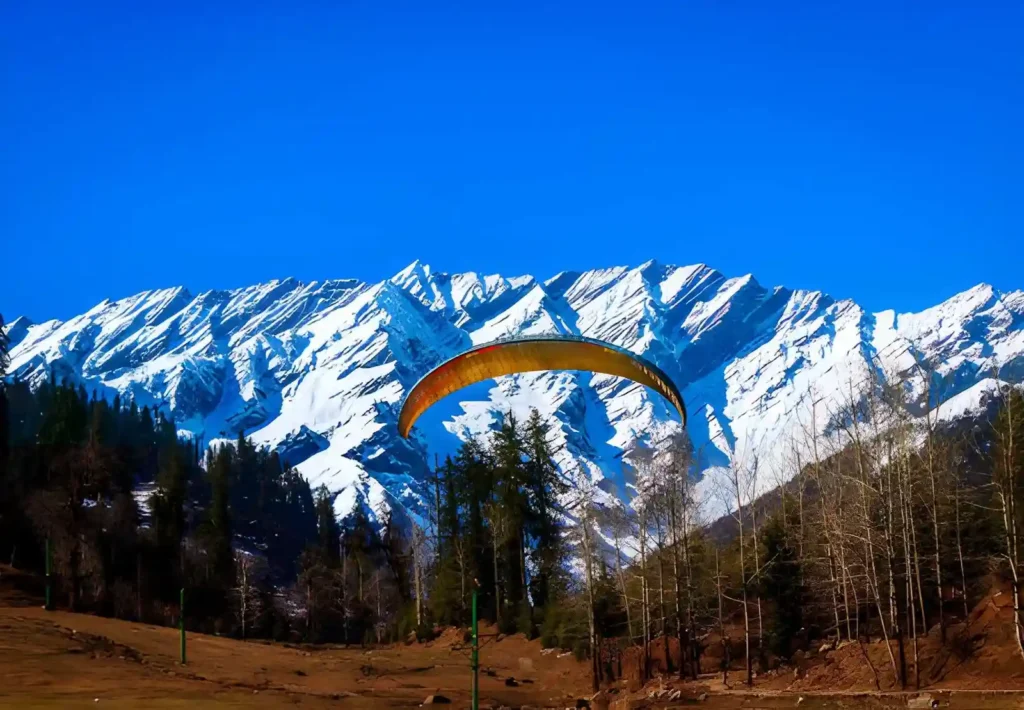
Solang is about 13 km from Manali and takes around 30 to 45 minutes by road. It is an open meadow with paragliding, zorbing, quad bikes and a ropeway in summer, and skiing in winter. Solang is also the base for treks towards Anjani Mahadev, Hanuman Tibba and Patalsu Peak.
Activity rates change by season and operator. Ask for the printed rate list, compare two or three vendors and avoid paying in advance on the roadside. Reach by 9 AM in peak season, because traffic builds up by midday. Solang does not need a Rohtang permit, since the permit applies beyond the Gulaba barrier.
Kothi, Gulaba and Marhi
These stops lie on the road towards Rohtang:
- Kothi: About 12 to 13 km from Manali. A quiet village with views over the gorge.
- Gulaba: About 21 km from Manali. Fresh snow in winter and the starting point for the Bhrigu Lake trek.
- Marhi: Roughly 35 km from Manali, with roadside dhabas for tea and hot parathas.
Rohtang Pass
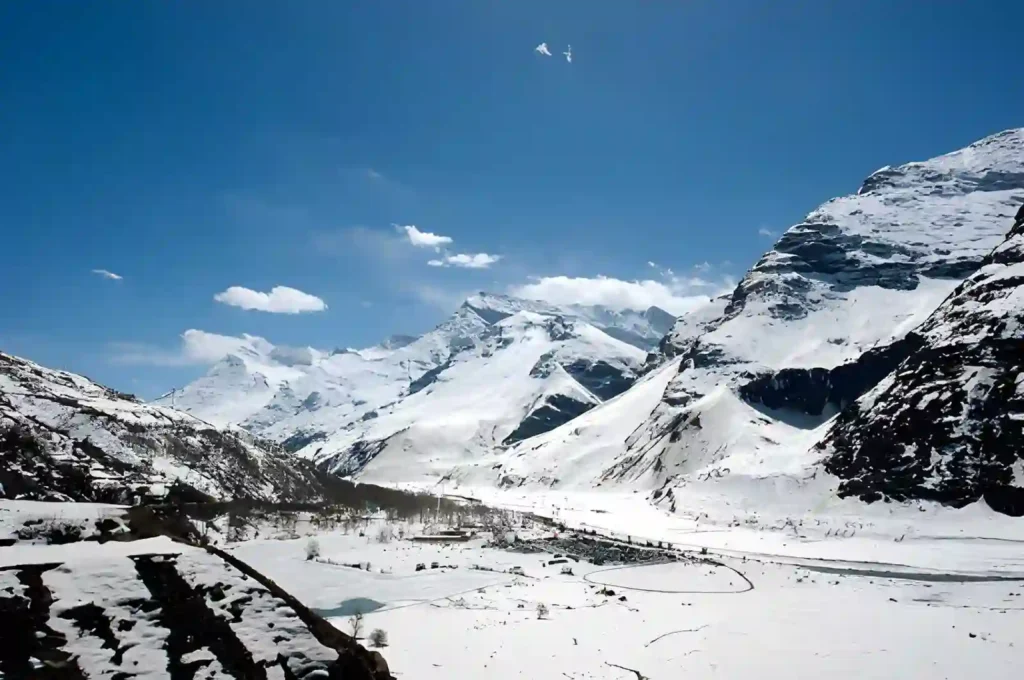
Rohtang is 51 km from Manali and sits at about 3,978 metres. The pass is open only in the warmer months. It reopened on 17 May this year and usually closes in late November.
The permit rules, as listed on the official Rohtang portal (rohtangpermits.hp.gov.in):
- Fee: ₹500 permit plus ₹50 congestion charge for cars, jeeps and MUVs. Buses and heavy vehicles pay ₹500 plus ₹100.
- Daily limit: 800 petrol and 400 diesel vehicles.
- Release times: Two batches each day, at 10 AM and 4 PM. Each batch has 400 petrol and 200 diesel slots.
- Booking window: You can apply up to 2 days ahead.
- Validity: One day only, to and fro. A printout is compulsory.
- Documents: Valid ID, a PUC certificate, and a vehicle no more than 10 years old.
- Weekly limit: Three permits per vehicle per week.
- Special permit: A separate category for private vehicles, limited to 60 petrol and 40 diesel vehicles a day.
The permit is per vehicle, not per person. Slots for weekends and holidays go within minutes, so plan two possible Rohtang days instead of one. The portal also lists a weekly maintenance day with no vehicles allowed. Guides report it as Tuesday, so check the portal for the current day. A Hamta Pass permit also appears on the same portal, which is worth checking if you plan that trek.
Start by 6:30 or 7 AM, and check road status on the morning of your trip. The pass can close at short notice.
Atal Tunnel and Sissu
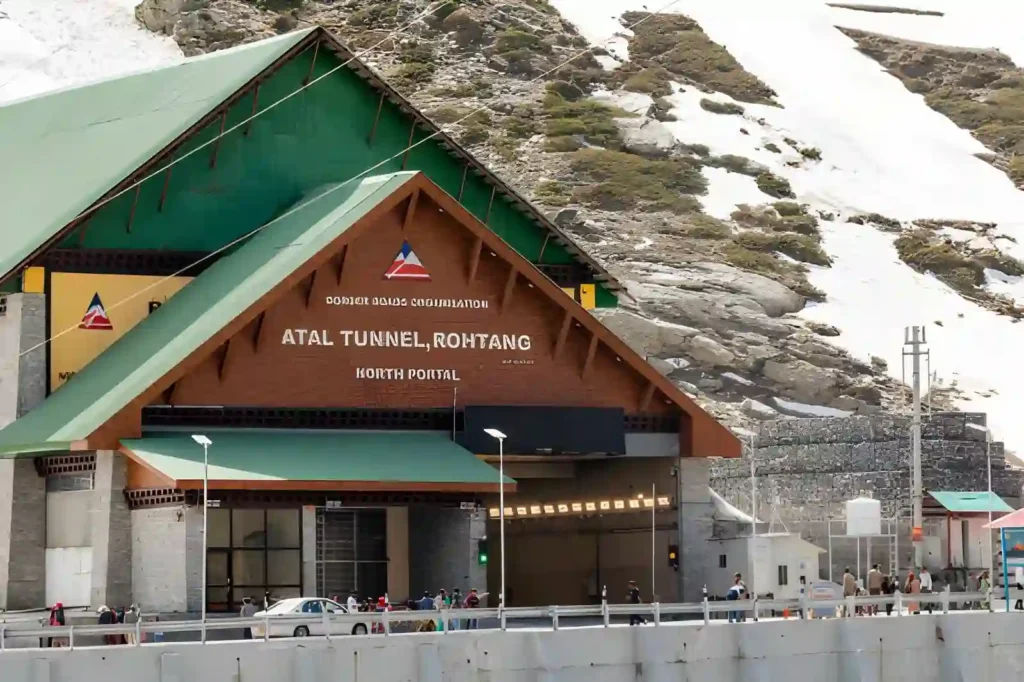
The Atal Tunnel is 9.02 km long and opened in October 2020. The south portal at Dhundi is about 25 km from Manali. The tunnel needs no permit and has no toll, and it stays open when Rohtang is closed.
On the other side, the landscape changes from green forest to the dry, rain-shadow valley of Lahaul. Sissu is the first village after the tunnel, about 40 km from Manali and a 1 to 1.5 hour drive. It has a waterfall and, in winter, snow. This is the best plan B when Rohtang is closed or sold out.
Kullu Valley: What to See
Kullu Town
Raghunath Temple in Sultanpur is the main temple of the valley and is dedicated to Lord Rama. It dates to the 17th century and is free to enter. Listed timings vary from around 5 or 6 AM to 8 or 9 PM, so confirm locally.
Kullu Dussehra is the valley’s biggest festival. It begins on Vijayadashami, the day Dussehra ends in most of India, and runs for about a week at Dhalpur Maidan. Hundreds of village deities arrive in palanquins around Lord Raghunath’s chariot. The 2026 edition was reported for late October, with sources differing by a day on the exact dates. Check the Kullu district website for the dates each year. No ticket is needed.
Bijli Mahadev Temple
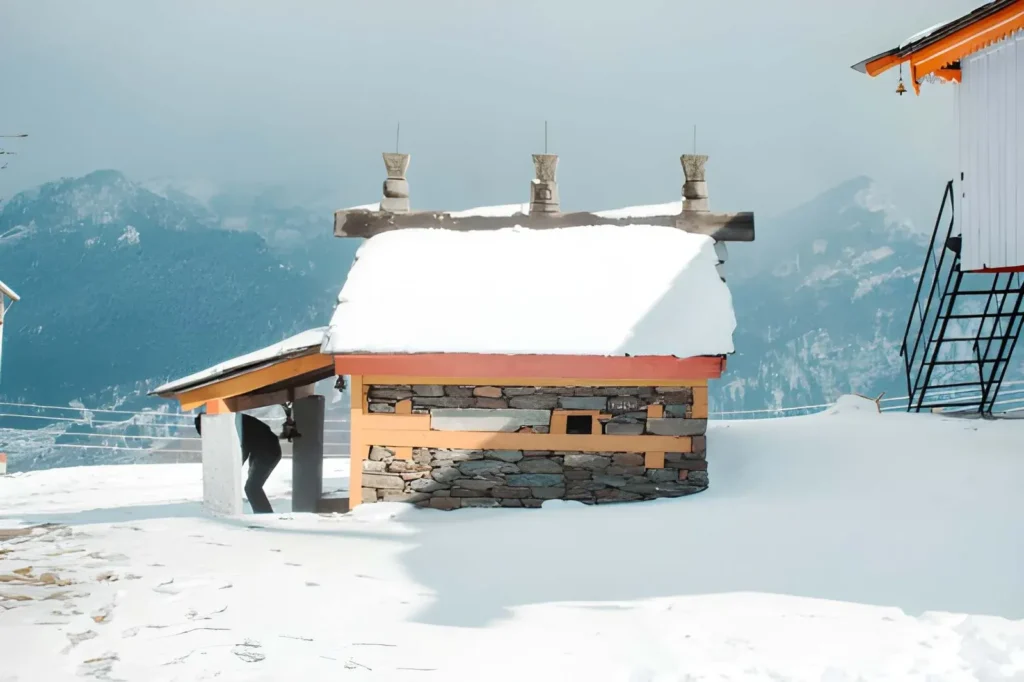
A Shiva temple at about 2,460 metres on a ridge above Kullu. You drive to Chansari village, then climb roughly 3 km of stone steps through pine and cedar forest. Most people take around 2 hours one way. Sources describe the climb as easy to moderate. Entry is free, and the views of the Kullu and Parvati valleys are the reward. Start in the morning for clearer views.
River Rafting at Pirdi, Raison and Babeli
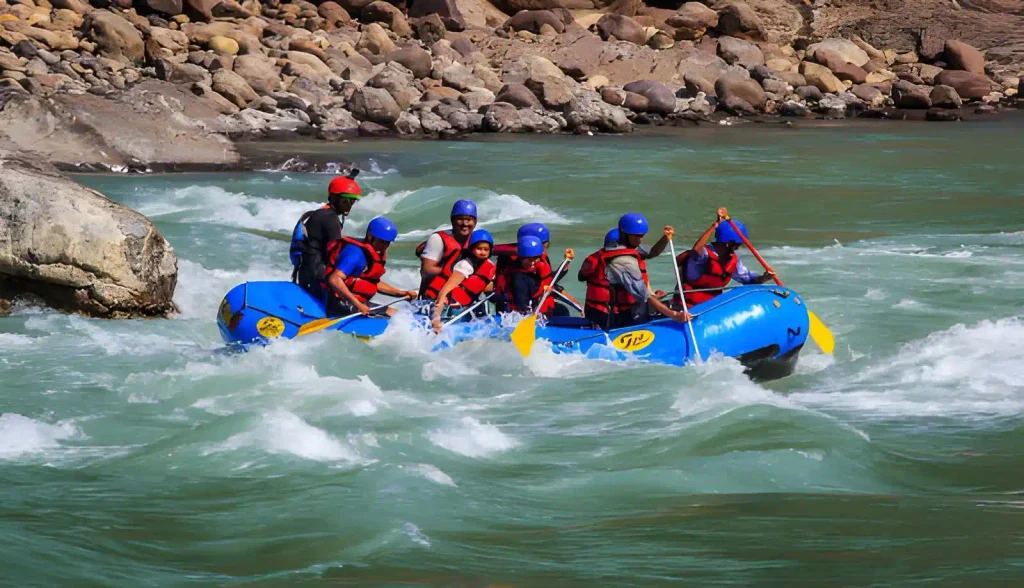
The Beas has several rafting stretches near Kullu. Pirdi, Raison and Babeli are the usual start points, and stretches range from about 7 km to 14 km. Published rates vary widely by stretch and season, from around ₹450 for a short run to ₹1,000 to ₹1,500 for the longest. Holidify lists a general range of ₹500 to ₹2,000 per person. Rafting usually pauses in the monsoon, so the best windows are April to June and October to December.
Naggar
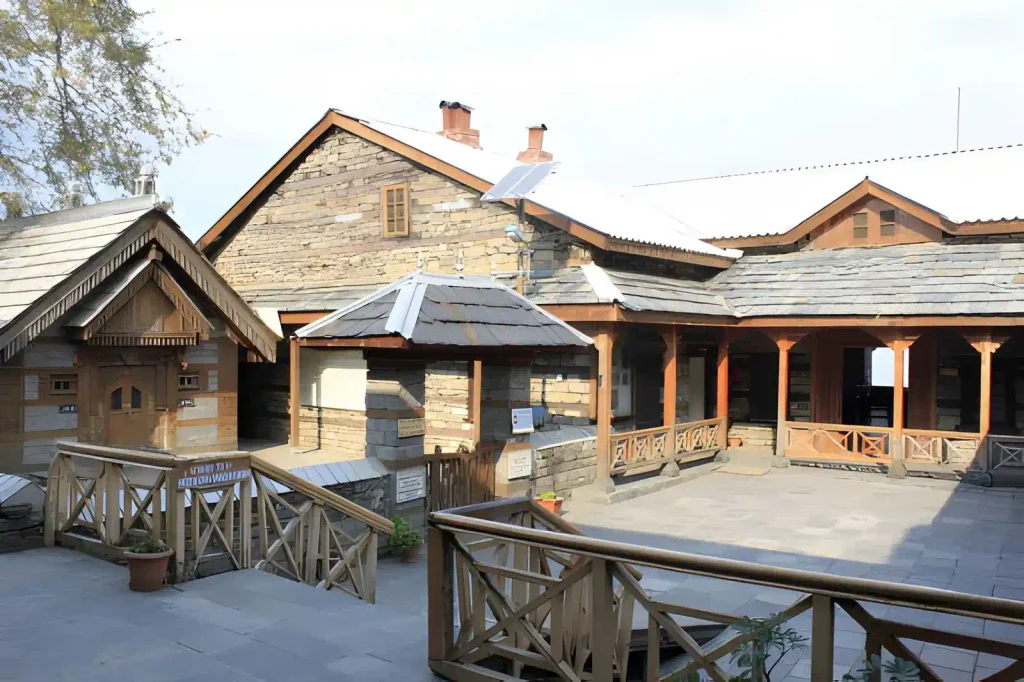
Naggar is about 20 to 22 km from Manali and was the capital of the Kullu kingdom before it moved to Sultanpur in 1660. It is the easiest way to get off the main tourist track.
- Naggar Castle: A stone-and-wood castle from around 1460, built by Raja Sidh Singh. It is now a museum and a heritage hotel run by Himachal Tourism. Timings are commonly listed as 9 AM to 5 or 6 PM. The entry fee is listed anywhere from ₹20 to ₹50, so keep change handy. Hotel guests enter free.
- Nicholas Roerich Art Gallery: The former home of the Russian painter, now a gallery of his Himalayan paintings. It is open 9 AM to 5 PM and closed on Mondays.
- Tripura Sundari Temple: A wooden pagoda-style temple, about 1 km from the Naggar bus stand.
- Gauri Shankar Temple: A stone temple of about the 11th century.
Give Naggar a half day, or a full day with Jana Falls.
Jana Falls and Rumsu
Jana Falls is about 32 km from Manali and 12 km from Naggar, a short walk from the road. Rumsu is a quiet village 3 to 4 km from Naggar, surrounded by apple orchards. It is also the starting point for the Chandrakhani Pass trek.
Jagatsukh
About 6 km from Manali, Jagatsukh was an early capital of the Kullu kingdom. It has the Gauri Shankar and Gayatri temples.
Parvati Valley: Kasol, Manikaran and Malana
The Parvati Valley is better as a separate overnight trip than a rushed day return.
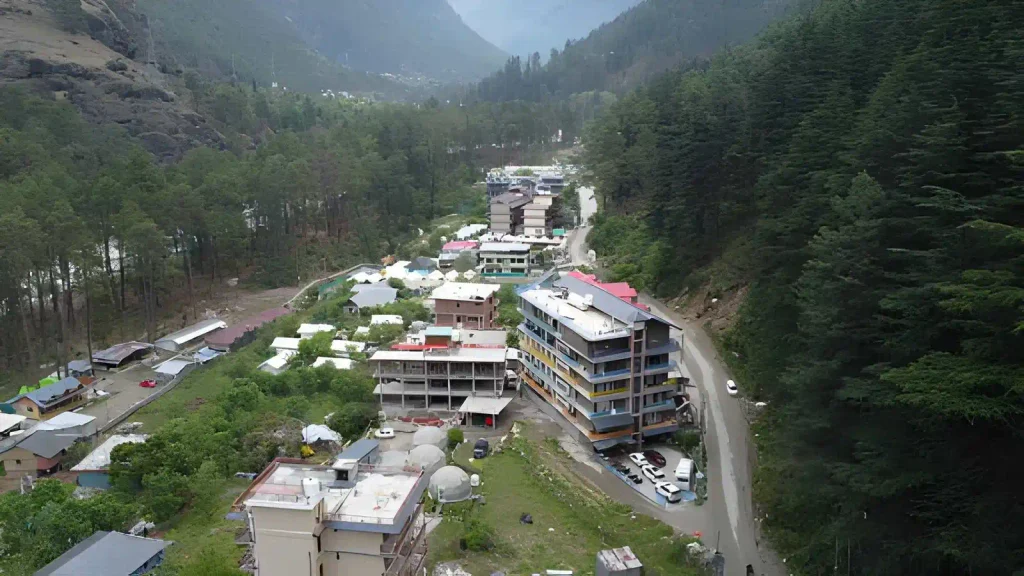
Kasol is about 75 to 80 km from Manali, a 2.5 to 3 hour drive, and sits along the Parvati River. Cabs commonly start around ₹2,500 to ₹3,300 one way. Bhuntar is about 31 km from Kasol.
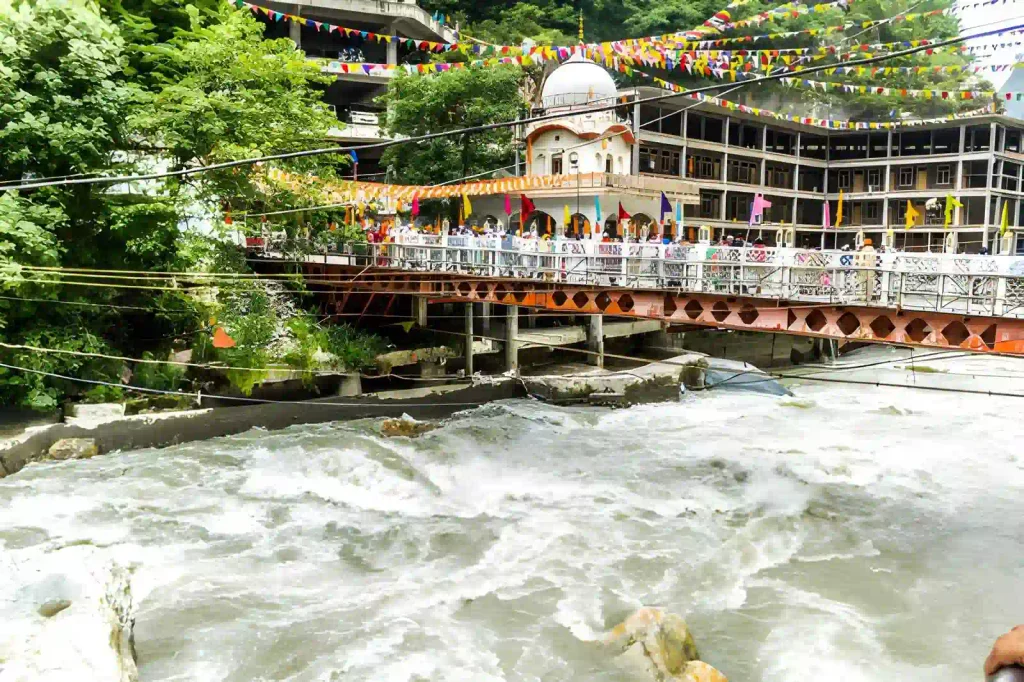
Manikaran Sahib is a Sikh and Hindu pilgrimage site about 4 km beyond Kasol, known for its hot springs and langar. The gurdwara is open 24 hours and entry is free. Cover your head and dress modestly.
Malana is an old self-governing village at about 2,650 metres, reached from Jari. Visitors are welcome in the daytime, but the rules are strict and enforced:
- Do not touch people, houses, walls, temples or belongings.
- Outsiders cannot enter the temple.
- Tourists cannot stay overnight inside the village. Return to Jari or Kasol before dark.
- Reported fines for breaking village rules run from ₹2,500 to ₹3,500.
- Ask before photographing anyone.
If you cannot follow these rules carefully, skip Malana.
Quiet Corners and Offbeat Places
Sethan Village: About 12 km from Manali via Prini, at around 2,700 metres. It is a small Buddhist hamlet, known for igloo stays from mid-January to mid-March. A taxi from Manali usually costs ₹1,000 to ₹2,000.
Jibhi and Tirthan Valley: Wooden cottages, waterfalls and very few crowds. Jibhi is about 100 km from Manali, a drive of around 3 hours. It lies in the opposite direction from Sethan, so do not combine them in one day. Tirthan is the entry point for the Great Himalayan National Park, about 50 km south of Kullu.
Great Himalayan National Park: A UNESCO World Heritage Site since 2014, covering the Jiwa, Sainj and Tirthan valleys. The core zone needs a permit, issued at the Shamshi head office and the range offices at Ropa (Sainj) and Shairopa (Tirthan). Entry fees were recently revised across Himachal’s national parks, and reports mention ₹300 per day for Indian visitors. Older listings still show ₹50, so confirm at the park office before you go. Drones are not allowed.
Treks Near Manali and Kullu
| Trek | Highest point | Time needed | Best months | Notes |
| Bhrigu Lake | About 4,235 to 4,300 m | 3 to 4 days | Mid-May to October (June and September are ideal) | Starts at Gulaba. Moderate, with fast altitude gain and a real risk of mountain sickness. Rola Kholi camp is at about 3,800 m |
| Chandrakhani Pass | About 3,660 m (12,000 ft) | 3 to 4 days | May to October | Starts at Naggar or Rumsu and ends near Malana. Easy to moderate |
| Bijli Mahadev | About 2,460 m | 3 to 4 hours | Most of the year | 3 km climb from Chansari. Easy to moderate |
| Hampta Pass | – | Multi-day | Summer to early autumn | The Rohtang permit portal lists a separate Hamta Pass permit, so check requirements before booking |
Hire a local guide if you are unsure of the route, and avoid starting treks late in the afternoon. Mountain weather turns fast.
Sample Itineraries
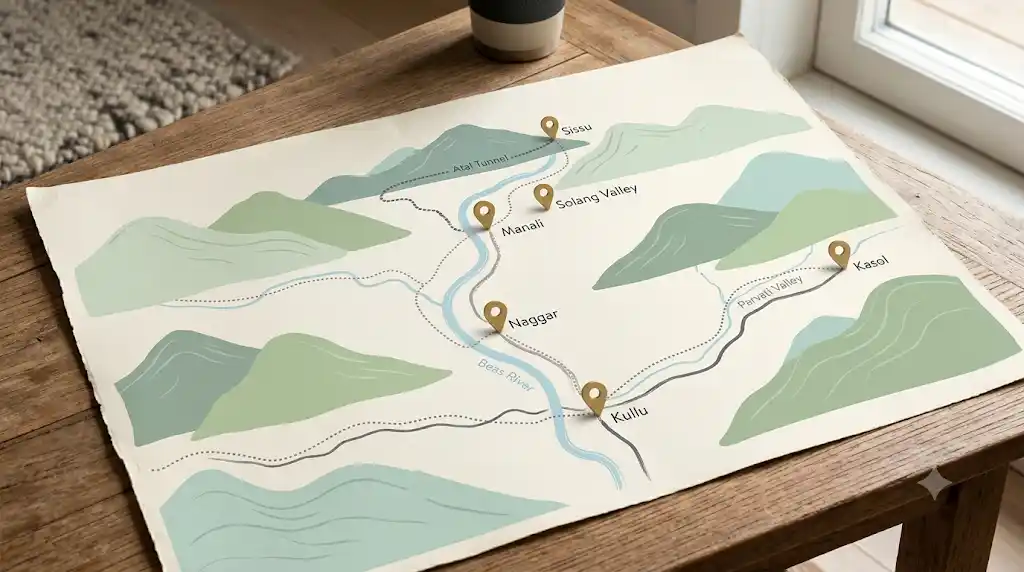
3 days in Manali
- Day 1: Hadimba Temple, Manu Temple and Old Manali, Manali Gompa, Mall Road in the evening
- Day 2: Atal Tunnel, Sissu and Solang Valley (or Rohtang Pass in season, with a permit)
- Day 3: Vashisht hot springs, Jogini Falls and Nehru Kund
5 days in Manali and Kullu
- Days 1 to 3: As above
- Day 4: Naggar Castle, Roerich Art Gallery (not on Monday), Jana Falls
- Day 5: Raghunath Temple in Kullu, rafting at Pirdi or Raison, and Bijli Mahadev if time allows
7 days: add the quiet side
- Days 1 to 5: As above
- Day 6: Kasol and Manikaran, with a night in the Parvati Valley
- Day 7: Return via Bhuntar, or swap in Jibhi and Tirthan for an overnight stay instead
How to Reach Manali and Kullu
By air: Bhuntar Airport (Kullu-Manali Airport) is 10 km from Kullu and 50 km from Manali. The taxi to Manali takes 1.5 to 2 hours. Flights are limited and weather-dependent, so many travellers fly to Delhi or Chandigarh instead.
By train: There is no station in Manali or Kullu. Chandigarh is the usual railhead, about 300 km from Manali. Joginder Nagar is a narrow-gauge station on the line from Pathankot. It is slow, and the road onward is long.
By road: Delhi to Manali is about 530 to 570 km and takes 12 to 14 hours. Chandigarh to Manali is roughly 300 to 310 km. Volvo and deluxe buses run from Delhi, Chandigarh, Shimla and Dharamshala. Fares move with season and bus type. An HRTC AC Volvo sleeper from Delhi was listed at ₹900 to ₹1,200 for monsoon 2026, and premium Volvos can run up to ₹2,500. Book ahead in peak months.
Where to Stay
These are indicative planning ranges, not official tariffs. Rates rise sharply in peak season and around holidays.
| Type | Approximate cost per night | Where |
| Budget | ₹800 to ₹3,000 | Hostels and homestays in Old Manali and Vashisht |
| Mid-range | ₹3,500 to ₹7,000 | Cottages and hotels in Manali, Vashisht and Naggar |
| Luxury | ₹8,000 and above | Riverside resorts and heritage stays, including Naggar Castle |
Stay in Old Manali or Vashisht for atmosphere, and skip the Mall Road area if you want quiet nights. A split stay works well: one or two nights in Manali for convenience, then one in Naggar or Jibhi for the quiet.
What to Eat
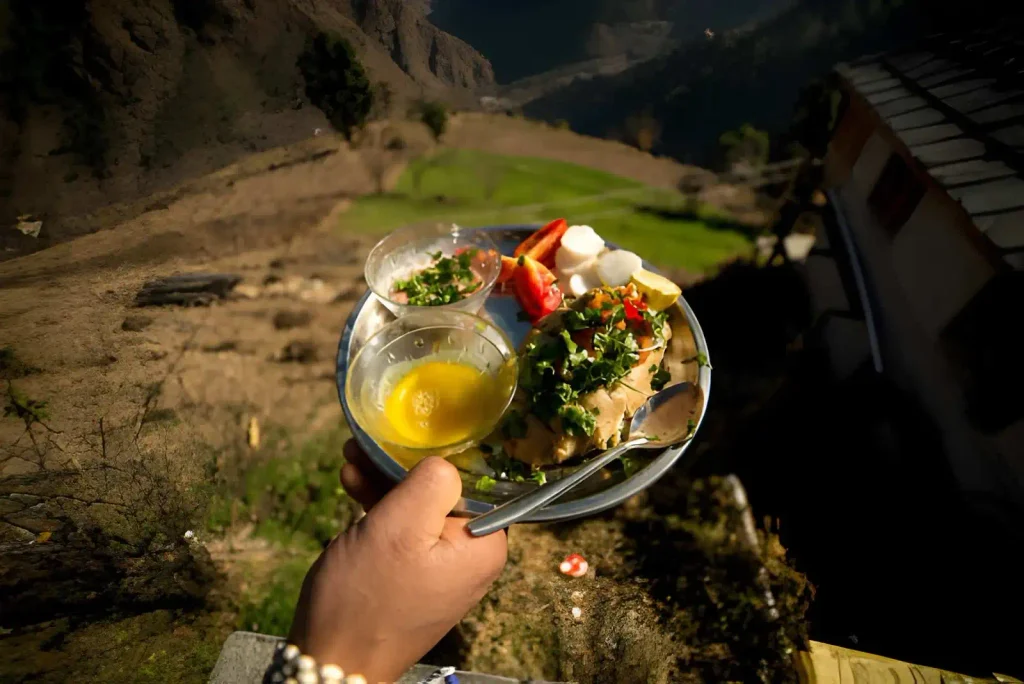
- Siddu: Steamed Himachali bread, usually served with ghee.
- Trout: Himachal Tourism notes that most restaurants serve it. It is freshest around Tirthan.
- Himachali dham: A traditional festive meal of rice, dal and curd-based dishes.
- Momos and thukpa: Tibetan influence is strong, especially near the Gompa and Mall Road.
- Café food: Old Manali menus lean towards Italian and Mexican, and Vashisht has rooftop cafés with mountain views.
Approximate Budget
Costs depend mostly on stay and transport. One operator’s published chart for a 6-day, 5-night private-car Kullu-Manali package listed roughly ₹10,000 to ₹19,000 per person off-season, and noted a rise of ₹1,000 to ₹2,000 in peak season. Independent travellers using hostels, shared transport and local food can spend less. Add activities separately, such as rafting, paragliding and the ropeway.
Always confirm current rates before booking.
Practical Tips
- Book the Rohtang permit on the official portal only, and carry a printout.
- Leave Manali before 9 AM for Rohtang and Solang to avoid jams.
- Check weather and road status the evening before any high-altitude trip.
- Carry cash. Network and ATMs can be patchy in villages.
- Pack woollens even in summer. Himachal Tourism warns that thunderstorms and sudden snow can drop temperatures within minutes.
- Go slow on altitude. Drink water and avoid heavy meals at Rohtang.
- Dress modestly at temples and gurdwaras.
- Respect local rules in Malana and inside protected forest areas.
Frequently Asked Questions
How many days are enough for Manali and Kullu?
Five days cover the main sights in Manali plus Naggar and Kullu. Seven days let you add the Parvati Valley or Tirthan.
Do I need a permit for Rohtang Pass?
Yes, for a sightseeing visit. It is booked online per vehicle at rohtangpermits.hp.gov.in and costs ₹550 for a car or jeep. You do not need it to drive through the Atal Tunnel or visit Sissu.
Is Rohtang Pass open in winter?
No. It closes in late November after heavy snow and reopens around May. The Atal Tunnel stays open, so Sissu is the winter alternative.
What are the best offbeat places near Manali?
Naggar, Rumsu, Jana Falls, Sethan, Jibhi and Tirthan Valley are good quiet options.
Which airport is closest to Manali and Kullu?
Bhuntar (Kullu-Manali Airport), 10 km from Kullu and 50 km from Manali.
Is the Manali Gompa free to visit?
Yes, entry is free. Timings vary by source, so confirm locally.
Can tourists stay overnight in Malana?
No. Tourists cannot stay inside the village. Visit in the daytime and return to Jari or Kasol before dark.
When is Kullu Dussehra?
It begins on Vijayadashami, usually in October, and runs for about a week at Dhalpur Maidan. Check the Kullu district website for each year’s dates.
Fees, timings, permits and road status can change at short notice. Please confirm on official sources before you travel.