The first time I walked into the deodar forest and saw the Hidimba Devi Temple Manali is famous for, I forgot about my phone for ten full minutes. Wooden carvings, cold mountain air, and not a single idol inside the cave sanctum. That moment is why I keep going back to Manali, even after twenty years of travelling.
But Manali is not just one temple. It is temples, riverside lanes, waterfalls, and snowy viewpoints stacked on top of each other. This guide covers each attraction one by one, with the fees, timings and little tricks I wish someone had told me earlier.
Quick Snapshot Before You Plan
- Best time: March to June for pleasant weather, December to February for snow, September to October for clear skies and fewer crowds.
- Getting there: Nearest airport is Bhuntar (Kullu), around 50 km away. Nearest broad-gauge railhead is Chandigarh, and most people finish the trip by Volvo bus or cab from there or from Delhi.
- Budget: Most attractions here are free or cost under ₹50. Your real spend is on stay, food, cabs and activities.
- Stay: Budget hostels and homestays in Old Manali and Vashisht, mid-range hotels around Mall Road, and luxury resorts on the Naggar and Solang side.
Hidimba Devi Temple Manali: Timings, Entry Fee and What to Expect
This is the one place I never skip. The temple was built in 1553 and is dedicated to Hidimbi Devi, the wife of Bhima from the Mahabharata. It is around 24 metres tall, with three tiered wooden roofs topped by a brass cone.
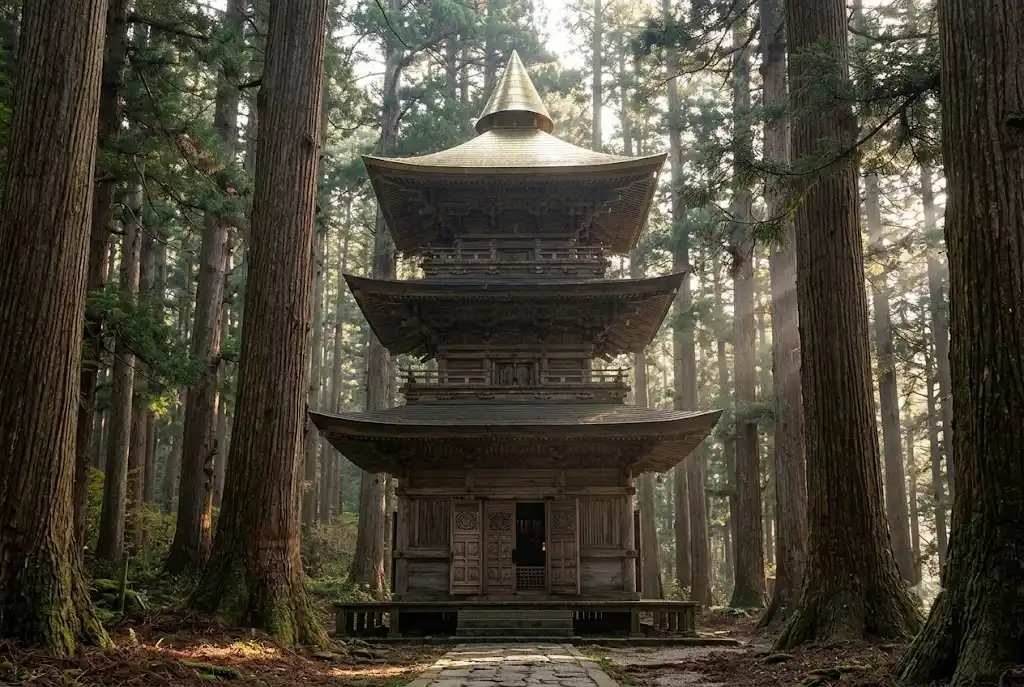
Hidimba temple Manali timings: most sources list 8 AM to 6 PM daily. I would reach by 8:30 AM, when the forest is quiet and the light is lovely.

Hidimba temple Manali entry fee: it is free. Do not pay anyone at the gate for a “special entry”.
It sits roughly 2 km from Mall Road, so a taxi or a slow uphill walk both work. If you come in May, you may catch the Hadimba Devi Fair with folk music and dances.
Old Manali Places to Visit
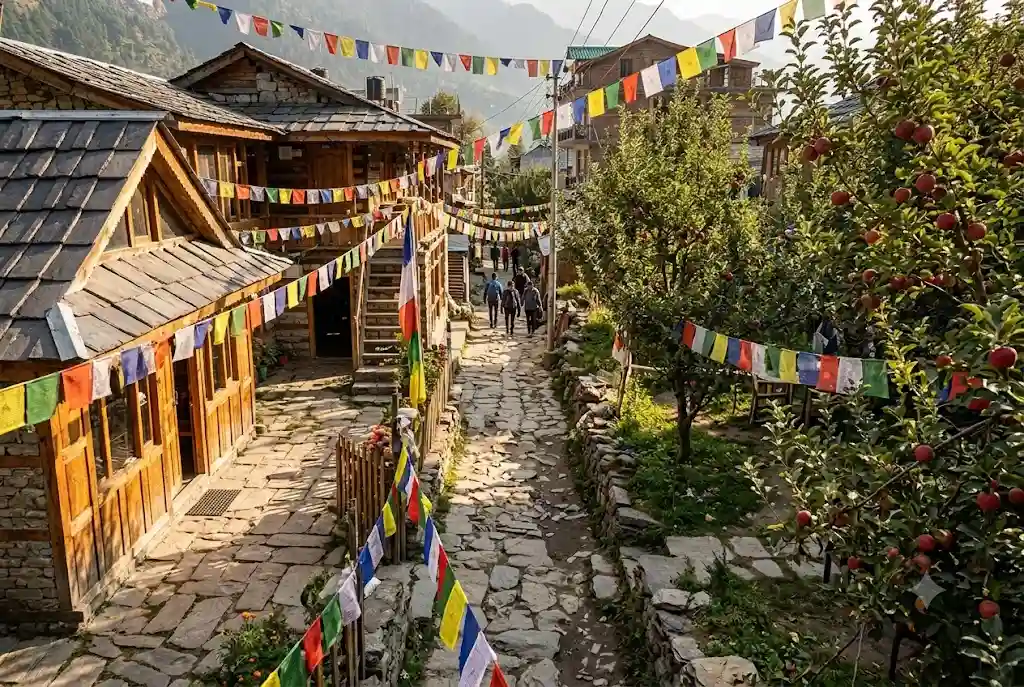
Old Manali feels like a different town. Narrow lanes, apple orchards, cafes with river views and backpackers from everywhere. Here are the old Manali places to visit that are actually worth your time:
- Manu Temple: dedicated to sage Manu and built in pagoda style. It is around 3 km from the bus stand and usually open from morning to evening.
- Old Manali Bridge and cafe lanes: best for a slow lunch, not for rushing.
- Beas river stretch: sit on a rock and just listen to the water.
My tip: walk from Hidimba Temple down to Manu Temple instead of taking a cab. You will see the village for real.
Manu Temple Manali: A Quiet Break
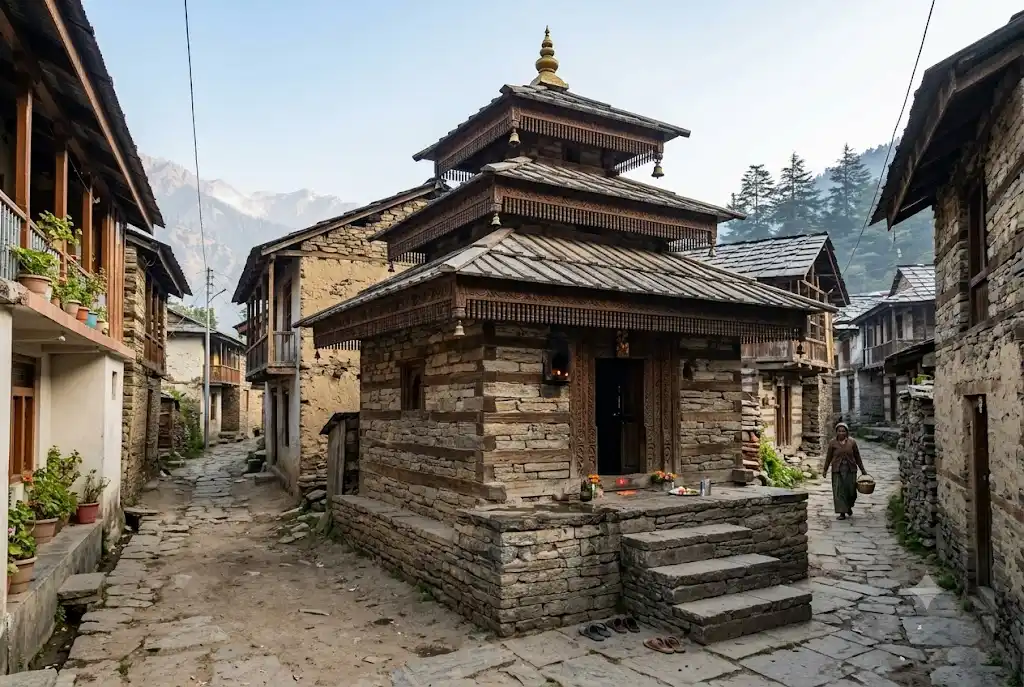
The Manu Temple Manali is small, old and slightly tucked away in a crowded lane. It is believed to be among the few temples dedicated to sage Manu in India. It is free to enter and takes 20 to 30 minutes.
Go in the morning if you want silence. By afternoon, the lane gets busy with cafe traffic.
Mall Road Manali: Shopping, Snacks and Evening Walks
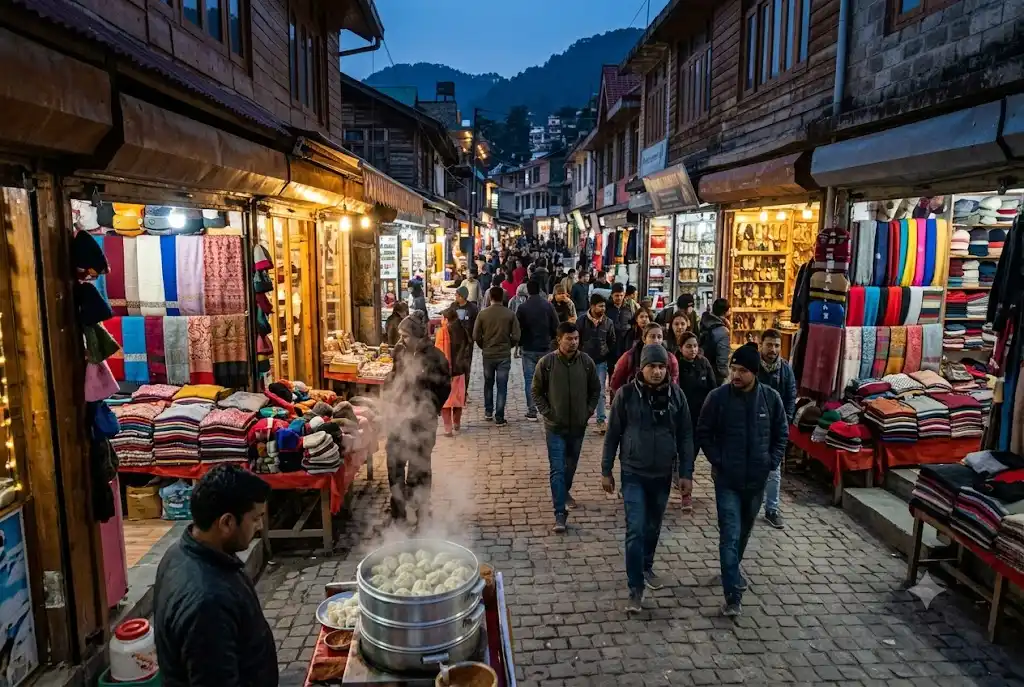
Mall Road Manali is where the town comes alive after sunset. Woollens, Kullu shawls, wooden souvenirs and plenty of street food.
Here is what I usually pick up or try:
- Kullu topi and woollen shawls (bargain politely, always)
- Local trout fish at the river-facing restaurants
- Siddu, a steamed Himachali bread, with ghee
- Hot momos and a simple Tibetan thukpa on a cold evening
Vehicles are restricted in parts of the stretch, so keep your evening free for walking.
Manali Nature Park, Van Vihar and the Sanctuary Side of Manali
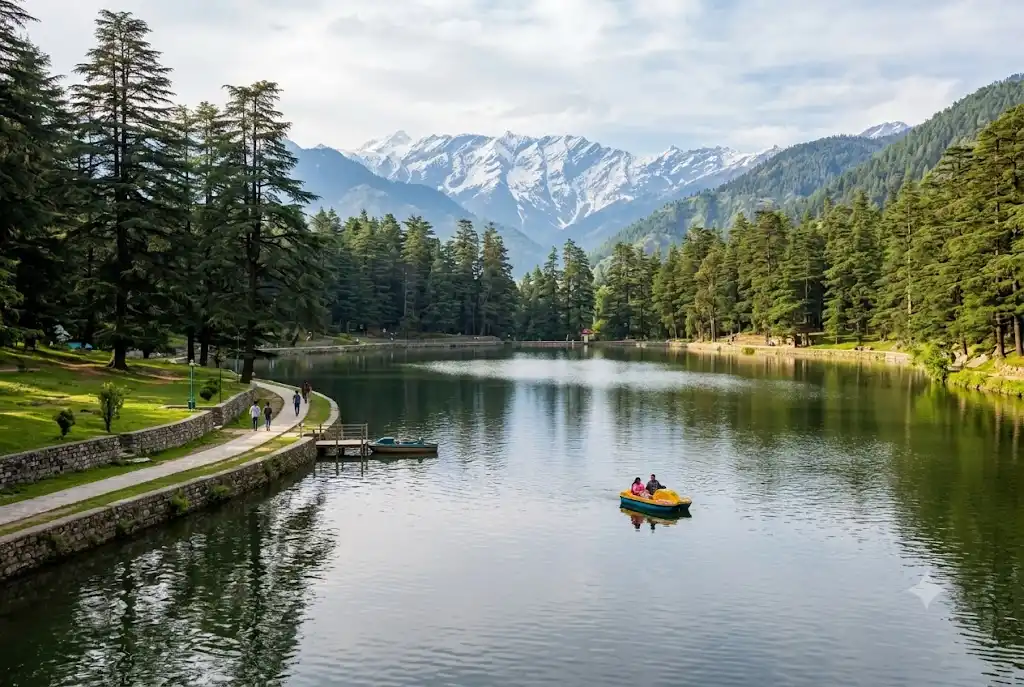
If you need a calm hour with kids or elders, Van Vihar Manali is a great pick. It is a deodar-lined park near Mall Road with walking paths, a small lake and boating. Entry has been listed at around ₹5 per person, with boating at around ₹30 for 15 minutes. These small fees get revised, so carry some cash.
If you often hear the terms Manali Nature Park and Manali sanctuary, they usually point to the green, forested belts around town, including the forest areas that surround Hidimba Temple and the Solang side. They are good for easy walks, but stay on marked paths, as these are protected forest zones.
Manali Gompa: Colour, Calm and Great Momos
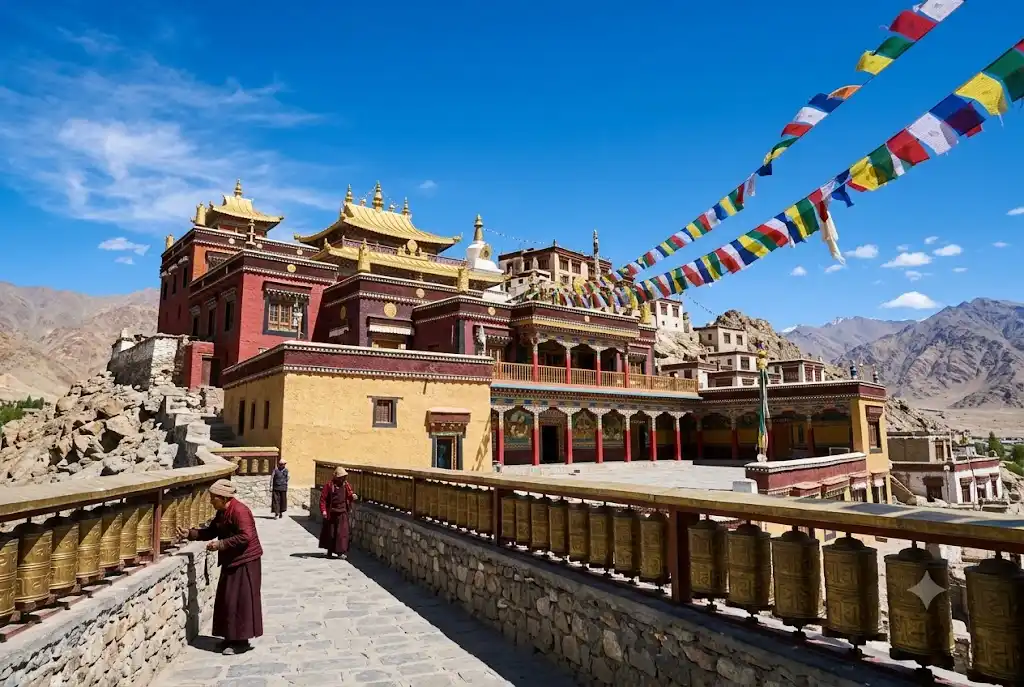
The Manali Gompa (Gadhan Thekchhokling Gompa) is a Tibetan monastery near Mall Road. Timings are commonly listed from around 7 AM to 7 PM.
The golden Buddha, prayer wheels and bright murals make it a lovely 30-minute stop. The Tibetan market next to it is where I buy my winter socks and enjoy cheap, hot momos.
Vashisht Temple and Vashisht Hot Springs Manali
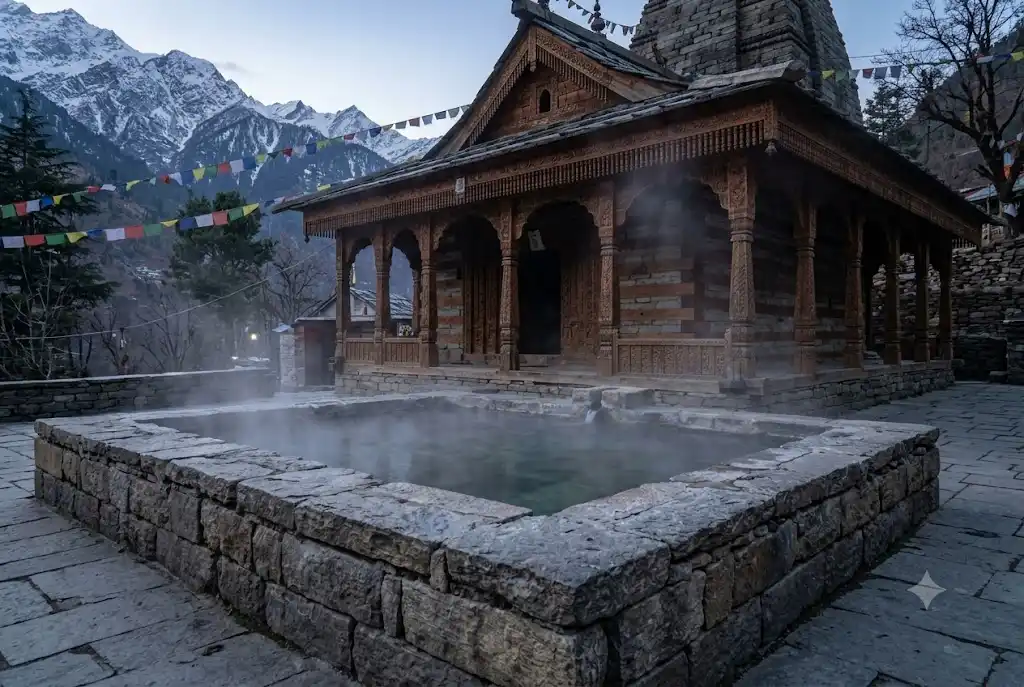
Across the Beas, around 3.5 km from the bus stand, is Vashisht village. The temple here is dedicated to sage Vashisht, the guru of Lord Rama.
The Vashisht hot springs Manali is the real reason most people come. Natural sulphur-rich water flows into bathing areas near the temple. Bathing timings are usually around 7 AM to 1 PM and 2 PM to 9 PM, though they can change.
My honest tip: go in the evening after a long day of walking. Carry a towel and a change of clothes, and expect gender-separate bathing arrangements.
Jogini Waterfall Manali: An Easy and Rewarding Trek
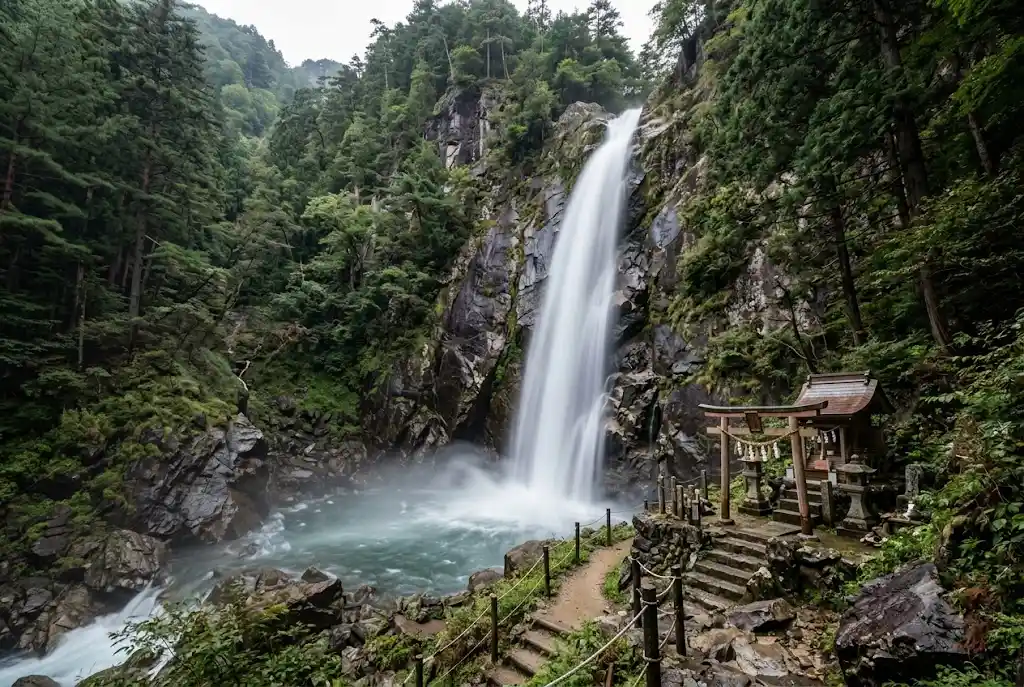
The Jogini waterfall Manali trek starts from Vashisht village. It is roughly a 3 km walk, around 45 minutes one way for a normal fitness level, and it is free.
The trail goes through apple orchards and pine forest, with small tea stalls on the way. The fall itself drops from a good height and sprays mist on the rocks below.
A few practical tips for Jogini Falls Manali:
- Wear shoes with proper grip, as the last stretch gets slippery
- Start before noon so you are back before afternoon clouds
- Avoid the trail right after heavy rain
- Carry water and a light snack
Nehru Kund and the Beas River Manali Stretch
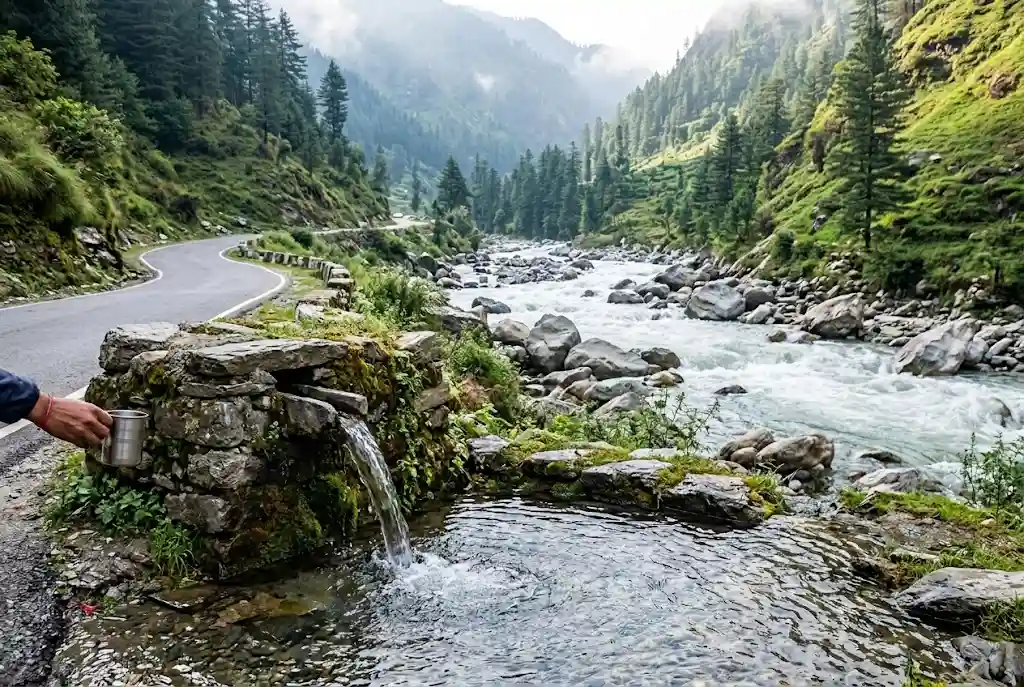
Somewhere around 5 to 6 km from Manali, on the road towards Solang and Rohtang, you will find Nehru Kund, a natural spring that is said to have been used by Jawaharlal Nehru when he visited. The water is cold and clean, and the spot is free.
It is a pretty stop to stretch your legs, with the Beas river Manali flowing right beside the road. I always fill my bottle here and take a few photos before moving on.
Solang Valley Manali: Snow, Paragliding and Open Meadows
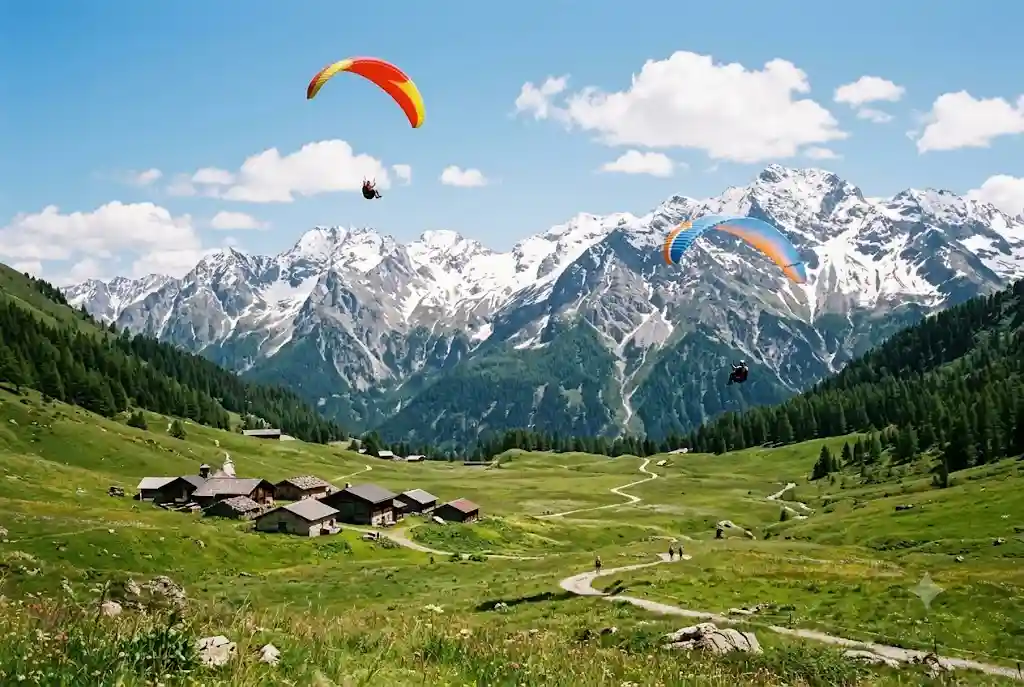
Solang Valley Manali is about 13 to 14 km from town and is the most popular spot for adventure. In summer it is green meadows, paragliding and zorbing. In winter, it turns into a snowfield with skiing and snow scooters.
Prices for activities vary a lot by season and operator. Ask for the rate list, compare two or three vendors and avoid paying in advance on the roadside.
If you are short on time, reach Solang by 9 AM. By midday, traffic can be heavy during peak season.
Kothi Village, Gulaba and Marhi: The Road Towards Rohtang
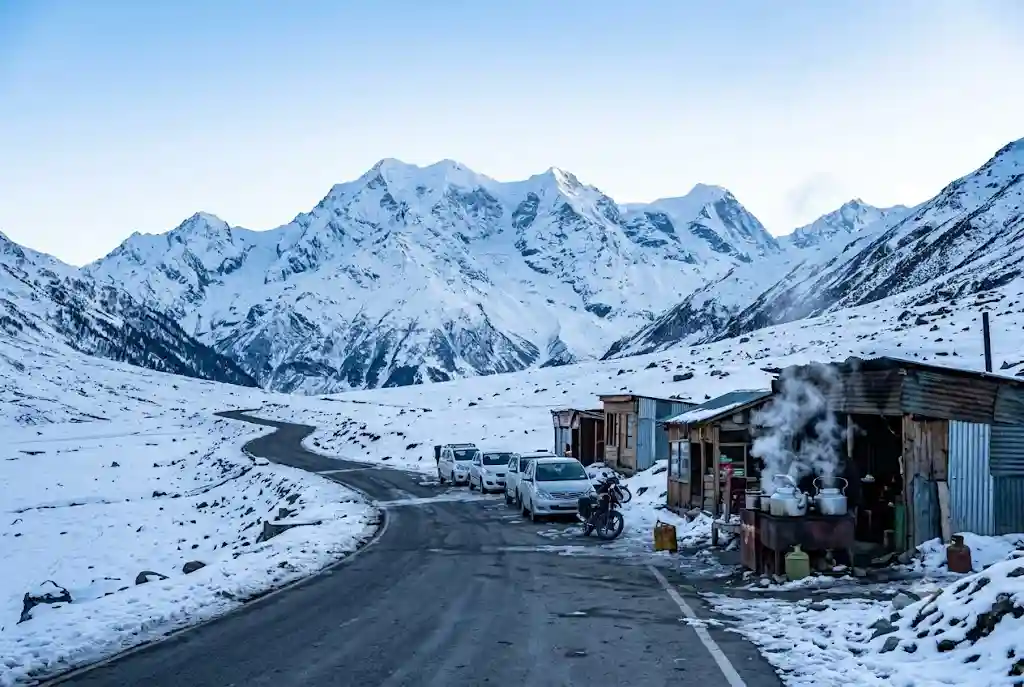
The drive beyond Manali is where the Himalayas really open up:
- Kothi Village Manali: a small, pretty village on the way, with a view of the Beas valley and a cooler, quieter feel.
- Gulaba Manali: a scenic snow-and-meadow stop on the Rohtang road, known for fresh snow in winter and cool breezes even in summer.
- Marhi Manali: a roadside halt with dhabas serving hot parathas and Maggi, around 30+ km from town. Most visitors stop here for tea and photographs.
Important update: Rohtang Pass needs an online vehicle permit, and the 2026 fee for a car or jeep was listed at around ₹500 plus ₹50 congestion charge. The pass can close without notice due to weather, so check the same-morning update. The Atal Tunnel, around 9 km long, needs no permit, but remember that driving through the tunnel is not the same as visiting Rohtang.
Naggar Castle Near Manali: A Perfect Half-Day Trip
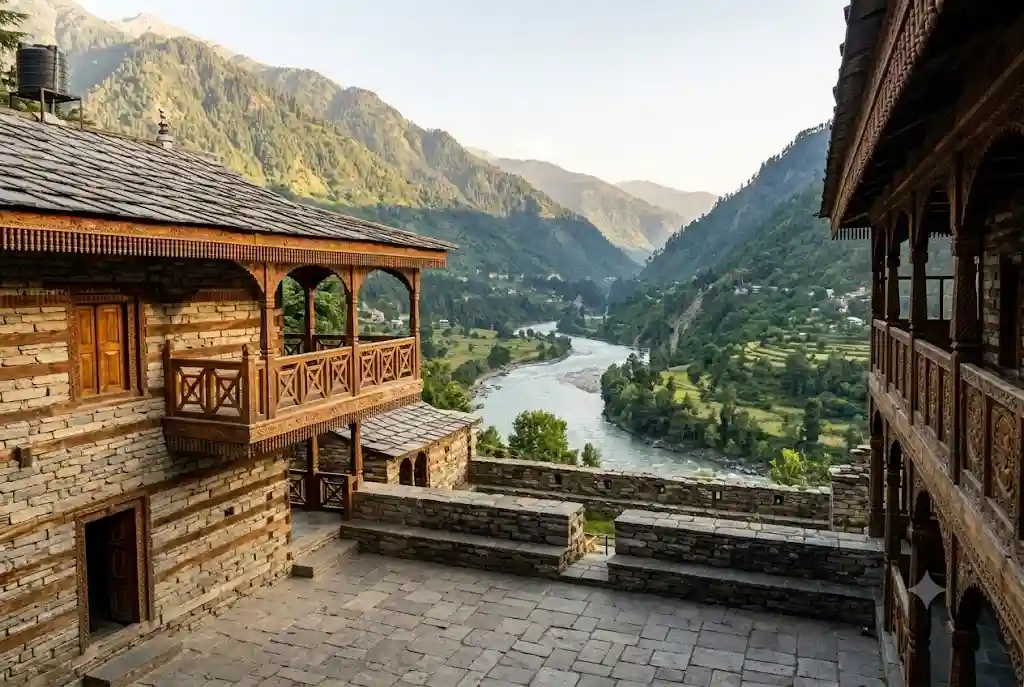
Around 20 km from Manali, Naggar Castle near Manali is a 15th-century stone-and-wood castle overlooking the Kullu valley. It was the royal residence of the Kullu kings and now houses a small museum and a heritage hotel.
Timings are commonly listed as 9 AM to 6 PM, with a small entry fee of around ₹30 (different sources mention slightly different amounts, so keep change handy). The views of the Beas valley from the courtyard are fantastic.
Combine it with the nearby Roerich Art Gallery and the local cafes in Naggar village for a relaxed day.
A Simple Way to Plan Your Days
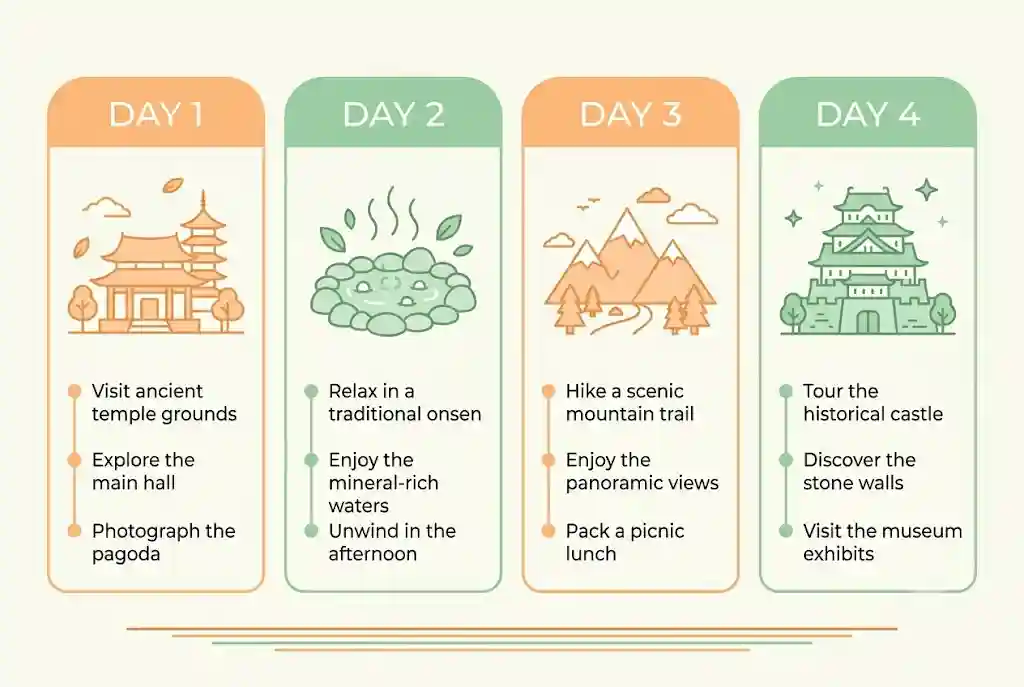
- Day 1: Hidimba Temple → Manu Temple → Old Manali cafes → Mall Road in the evening
- Day 2: Vashisht hot springs → Jogini Falls trek → Nehru Kund
- Day 3: Solang Valley → Kothi, Gulaba and Marhi (if the road is open)
- Day 4: Naggar Castle → Roerich Gallery → slow drive back
Final Thoughts
Manali is best when you do not rush it. Pick two or three places a day, eat local, and leave room for random chai stops. That is where the real memories come from.
If this guide helped, bookmark it, share it with your travel buddy and tell us in the comments which place is on your list first. For more honest, tested travel guides, keep following The Route Atlas.
Frequently Asked Questions
1. What are the Hidimba temple Manali timings?
Most sources list it as open from around 8 AM to 6 PM daily. Timings can shift slightly during festivals, so confirm locally.
2. Is there a Hidimba temple Manali entry fee?
No, entry is free.
3. How far is Solang Valley from Manali?
Around 13 to 14 km, which takes roughly 30 to 45 minutes depending on traffic.
4. Do I need a permit for Rohtang Pass and the Atal Tunnel?
Rohtang needs an online vehicle permit. The Atal Tunnel does not need a permit, but road access depends on weather and police advisories.
5. How long should I spend at Jogini Falls?
Plan around 2.5 to 3 hours for the round trip from Vashisht, including time at the falls.
Fees, timings and road status change often. Please verify locally before your trip.